

 müller+krahmer GmbH
Success is when data becomes knowledge. Part 5: What does the data tell us?
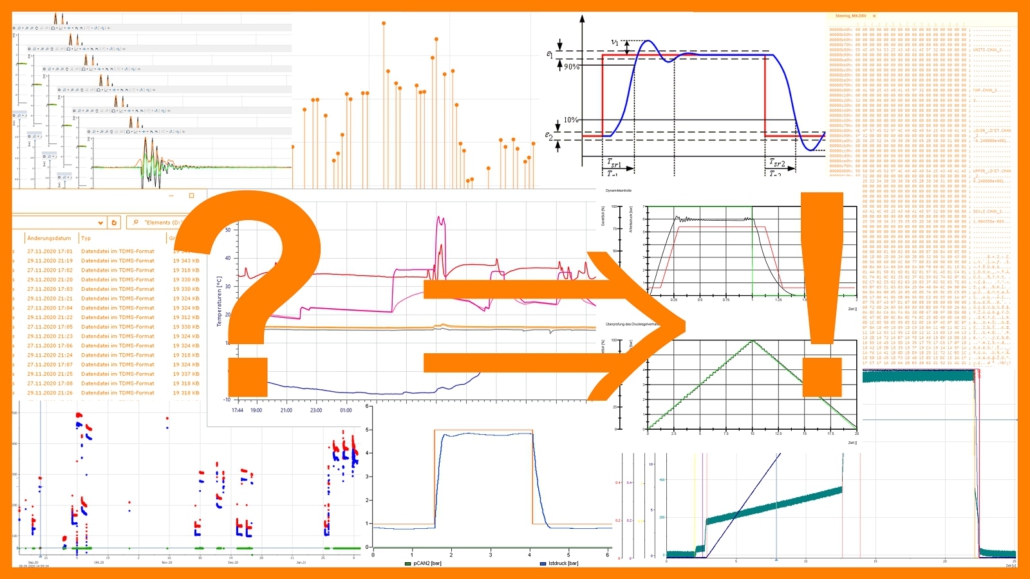
Or rather: what is the data meant to tell us? The desired information and the required conclusion determine which data needs to be collected and to what extent. For a simple product, it may be sufficient to produce a straightforward ‘pass/fail’ result. And to assess the associated production process, it is then sufficient to analyse all test results over time. In the case of complex tests, however, it is often a matter of anticipating future failures on the basis of minor parameter changes, or of identifying the interaction between several variables. Here, therefore, not only must many signals be recorded, but they must also be recorded with high resolution – both in terms of time and the measurement range. Very often, peripheral parameters, setpoints or user specifications are also significant. To enable them to be correlated with the data, they must be stored alongside the data.
The structure and scope of data generation therefore play a crucial role in determining the quality of the result and must consequently form the basis for the design of the test bench or the measurement system.
See also:
- Success is when data becomes knowledge. Part 1: Why?
- Success is when data becomes knowledge. Part 2: What data?
- Success is when data becomes knowledge. Part 3: Where to store the data?
- Success is when data becomes knowledge. Part 4: What tools to use for analysis?
CONTACT:
Holger Mueller
Email: mueller@mueller-krahmer.de
Mobile: +49 160 / 287 7294